Pressure Sensor Replacement in Automatic Gearboxes – Professional Servicing
Pressure sensors are key parts of the hydraulic system in an automatic gearbox. They monitor oil pressure in the various circuits of the gearbox and pass that information to the TCM. A failed pressure sensor can cause serious problems with the way the gearbox works.
Our workshop specialises in pressure sensor replacement in Mercedes-Benz 0DE (7G-TRONIC), 0GC (9G-TRONIC), VAG DQ380, DQ381, DQ500 and the specialist 0BH DQ500. We have professional sensor test equipment, which lets us diagnose the fault precisely before anything is replaced. This article explains what pressure sensors are, what a failure feels like and how we replace and test them.
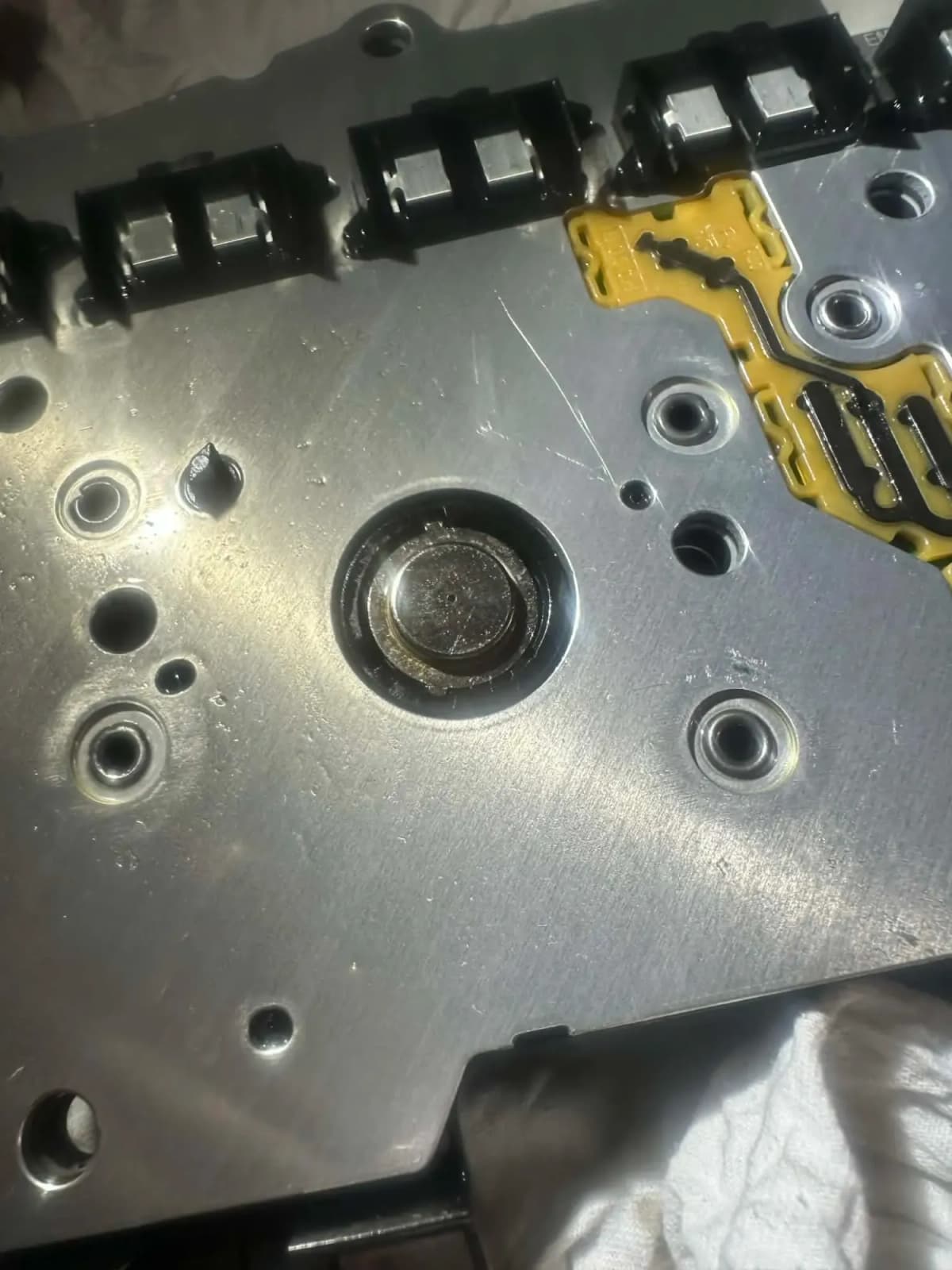
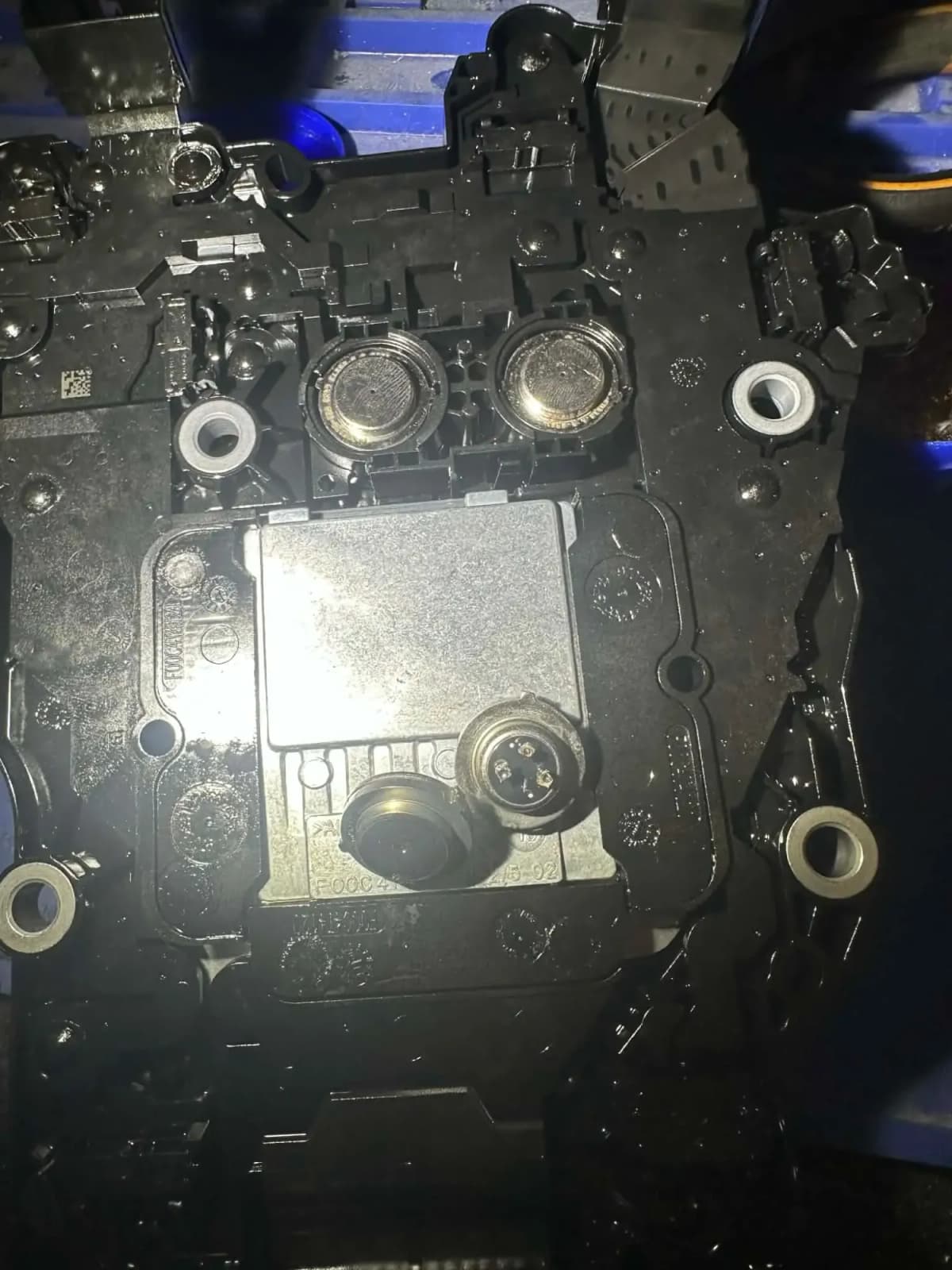
What are pressure sensors in an automatic gearbox?
Pressure sensors are precision electronic components that monitor oil pressure in different parts of an automatic gearbox. Their main jobs are:
- Monitoring line pressure – keeping track of pressure in the main oil circuit of the gearbox.
- Controlling clutch pressure – supervising the pressure that engages each clutch.
- Measuring converter pressure – monitoring pressure inside the torque converter.
- Communicating with the TCM – feeding data to the gearbox control unit in real time.
Where the pressure sensors sit
Depending on the automatic gearbox model, pressure sensors can be located in several different places:
- In the gearbox sump – the most common location for the line pressure sensor.
- In the valve body – sensors monitoring pressure in the individual hydraulic circuits.
- In the gearbox casing – sensors built directly into the gearbox housing.
- Next to the torque converter – dedicated sensors monitoring pressure inside the converter.
Symptoms of a faulty pressure sensor
A pressure sensor failure can show up as a range of symptoms that affect the way the automatic gearbox behaves:
Symptoms you can see and feel:
- Harsh or delayed gear changes
- Juddering under acceleration or when slowing down
- The gearbox behaving oddly with a cold engine
- The gearbox dropping into limp mode
- A flashing automatic gearbox warning light on the dashboard
Fault codes linked to pressure sensors:
- P0868 – Low oil pressure in the automatic gearbox
- P0842 – Pressure sensor circuit fault
- P0871 – Oil pressure sensor fault
- P0884 – TCM power input signal intermittent – read alongside sensor faults when the control unit's power supply is unstable
- P2769 – Torque converter clutch solenoid circuit low – a pressure-control fault, not a fault of the sensor itself
Why pressure sensors fail
Pressure sensors can fail for a number of reasons:
- Contaminated oil – deposits and debris can block the sensor diaphragm.
- Component ageing – normal wear of the electronic parts inside the sensor.
- Mechanical damage – vibration or impacts can damage the delicate parts of the sensor.
- Wiring problems – damaged cables or electrical connectors.
- An overheating gearbox – high temperatures can destroy the sensor electronics.
The pressure sensor replacement process
Replacing a pressure sensor is a precise job that calls for specialist knowledge and tooling. Our process includes professional sensor testing:
- Initial diagnostics – identifying the faulty sensor with a diagnostic tester and by reading the fault codes out of the TCM.
- Sensor testing – NEW! Professional sensor testing on specialist equipment: electrical, pressure, temperature and response-time checks. This tells us whether the sensor really does need replacing, or whether the fault lies elsewhere in the system.
- Removing the components – taking off whatever blocks access to the sensor (sump, valve body). On 0BH DQ500 sensors, extra dismantling may be needed because of where they sit.
- Replacing the sensor – carefully removing the old sensor and fitting the new one to the correct torque settings. We use original sensors or high-quality equivalents only.
- Refitting the components – putting every part that came off back together with new seals, and topping the oil back up.
- Function test – checking that the new sensor works correctly, verifying the pressure values on the diagnostic tester, clearing the fault codes and running a gearbox adaptation.
Supported gearboxes – pressure sensor replacement
Our workshop replaces pressure sensors in the following types of automatic gearbox:
Mercedes-Benz gearboxes
- 0DE (7G-TRONIC) – pressure sensors in the valve body and the sump. We replace the line pressure sensor as well as the sensors in the clutch circuits.
- 0GC (9G-TRONIC) – advanced pressure sensors in the hydraulic system of this 9-speed gearbox. Diagnostics and replacement of the sensors monitoring pressure in the various circuits.
- 7G-TRONIC/9G-TRONIC – professional pressure sensor replacement in the valve body, the sump and the hydraulic circuits.
VAG DSG gearboxes
- DQ380 – pressure sensor replacement in this 7-speed wet-clutch DSG. Sensors monitoring pressure in the K1 and K2 circuits.
- DQ381 – pressure sensors in the updated version of the DQ380. Replacement and calibration of the hydraulic pressure sensors.
- DQ500 – replacement of the standard pressure sensors in this 7-speed wet-clutch DSG. Audi Q7, VW Touareg and Porsche Cayenne covered.
- 0BH DQ500 – NEW! Replacement of the specialist pressure sensors in the 0BH DQ500 gearbox. These are a different type of sensor from the standard DQ500 ones – they call for specialist knowledge and tooling. We handle full replacement and testing of 0BH sensors.
The difference between DQ500 and 0BH DQ500 sensors
The DQ500 gearbox comes in several versions, coded 0CW, 0CL or 0BH. The pressure sensors in the 0BH DQ500 differ in construction and specification from the standard DQ500 sensors. They call for specialist diagnostics and professional test equipment. Our workshop has the right tools and the experience to replace both types.
Other makes
- BMW ZF 8HP/6HP – sensors monitoring pressure in the various gearbox circuits.
- Audi/VW DSG (DQ200, DQ250) – clutch pressure sensors in dual-clutch gearboxes.
- Ford PowerShift – hydraulic pressure sensors in dual-clutch gearboxes.
- Toyota/Lexus – sensors in conventional Aisin automatic gearboxes.
What you gain by replacing a faulty sensor
Replacing faulty pressure sensors brings the following benefits:
- Smooth gearbox operation restored – harsh gear changes and juddering are eliminated.
- Correct oil pressure – optimal oil flow through the hydraulic system.
- Limp mode cleared – the gearbox gets its full functionality back.
- Lower fuel consumption – optimal shift points improve fuel efficiency.
- A longer gearbox life – correct pressure protects the components from premature wear.
Professional pressure sensor testing
Our workshop has professional pressure sensor test equipment, which lets us diagnose the fault precisely before anything is replaced. Sensor testing covers:
- Electrical parameter test – checking resistance, voltage and the characteristics of the sensor output signal.
- Pressure test – verifying that the sensor measures correctly across its working range (0-10 bar).
- Temperature test – checking that the sensor stays stable at different oil temperatures.
- Response-time test – verifying how quickly the sensor reacts to a change in pressure.
- Endurance test – checking resistance to vibration and to real-world operating conditions.
Why testing before replacement matters
Professional sensor testing avoids replacing parts that are still healthy. Pressure problems often come from damaged wiring, contaminated oil or a fault in the TCM rather than from the sensor itself. Testing saves the customer time and money, and gives a precise diagnosis of the problem.
Why choose our workshop?
- Experience across many gearbox types – We work on sensors in 0DE, 0GC, DQ380, DQ381, DQ500 and the specialist 0BH DQ500
- Professional sensor testing – We have professional equipment for testing sensors before replacement – it saves time and money
- Professional diagnostics – Precise identification of the faulty sensor using a diagnostic tester and pressure tests
- Original parts – We use original sensors or high-quality equivalents only
- Modern equipment – Specialist tooling for automatic gearbox work plus professional test equipment
- An experienced team – Mechanics with years of experience in automatic gearbox repair and sensor replacement
- Quality guarantee – A guarantee on the work carried out and the parts fitted
Summary
Pressure sensor replacement is a common but important repair on automatic gearboxes. Faulty sensors can cause serious problems with the way the gearbox works, so replacing them quickly is key to keeping the car in good order.
Our workshop specialises in pressure sensor replacement in 0DE, 0GC, DQ380, DQ381, DQ500 and the specialist 0BH DQ500. With professional sensor test equipment we can pinpoint the problem and avoid replacing parts that are still working.
If you are seeing the symptoms of a faulty pressure sensor in your automatic gearbox, get in touch. We offer professional diagnostics with sensor testing and a guarantee on the work we carry out.
Frequently asked questions
What are pressure sensors in an automatic gearbox?
Pressure sensors in an automatic gearbox are electronic components that monitor hydraulic oil pressure in the various circuits of the gearbox. They report the current state of the hydraulic system to the control unit, which is what allows gear changes to be controlled correctly.
Which gearboxes do you cover for pressure sensor replacement?
We replace pressure sensors in Mercedes-Benz 0DE (7G-TRONIC) and 0GC (9G-TRONIC) gearboxes, in VAG DQ380, DQ381 and DQ500, and the specialist 0BH DQ500 sensors. We also work on BMW ZF, Ford PowerShift and other makes.
How do 0BH DQ500 sensors differ from standard DQ500 sensors?
The sensors in the 0BH DQ500 gearbox are a different type from the standard DQ500 ones. They differ in construction, electrical specification and measuring range, so they call for specialist diagnostics and professional test equipment. Our workshop has the right tools and the experience to replace both types.
Do you test sensors before replacing them?
Yes — our workshop has professional pressure sensor test equipment. Before anything is replaced we run electrical, pressure, temperature and response-time checks. That avoids replacing parts that are still healthy and pinpoints the real fault.
Which symptoms point to a faulty pressure sensor?
Typical signs of a faulty pressure sensor are fault codes P0868, P0842 and P0871, juddering during gear changes, the gearbox dropping into limp mode, incorrect oil pressure readings on the diagnostic tester and problems with gearbox adaptation. Professional testing shows precisely whether the fault is in the sensor or elsewhere in the system.
Can you drive with a faulty pressure sensor?
We do not recommend driving with a faulty pressure sensor. The gearbox may drop into limp mode, which restricts what it can do. Driving like that for any length of time can lead to more serious hydraulic and mechanical damage, so it is worth having the car diagnosed and the sensor replaced as soon as possible.
How long does a pressure sensor replacement take?
Replacing a pressure sensor takes between 1 and 3 hours, depending on where it sits in the gearbox. Some sensors are easy to reach; others need the gearbox partly dismantled or other components removed. Testing the sensor before replacement adds roughly 30-60 minutes to the total.
Is a gearbox adaptation needed after a sensor is replaced?
In most cases yes, especially on modern electronically controlled gearboxes. After the sensor is replaced we run an adaptation reset and a road test so that the gearbox relearns its optimal operating parameters with the new sensor. That keeps the hydraulic system working correctly.